
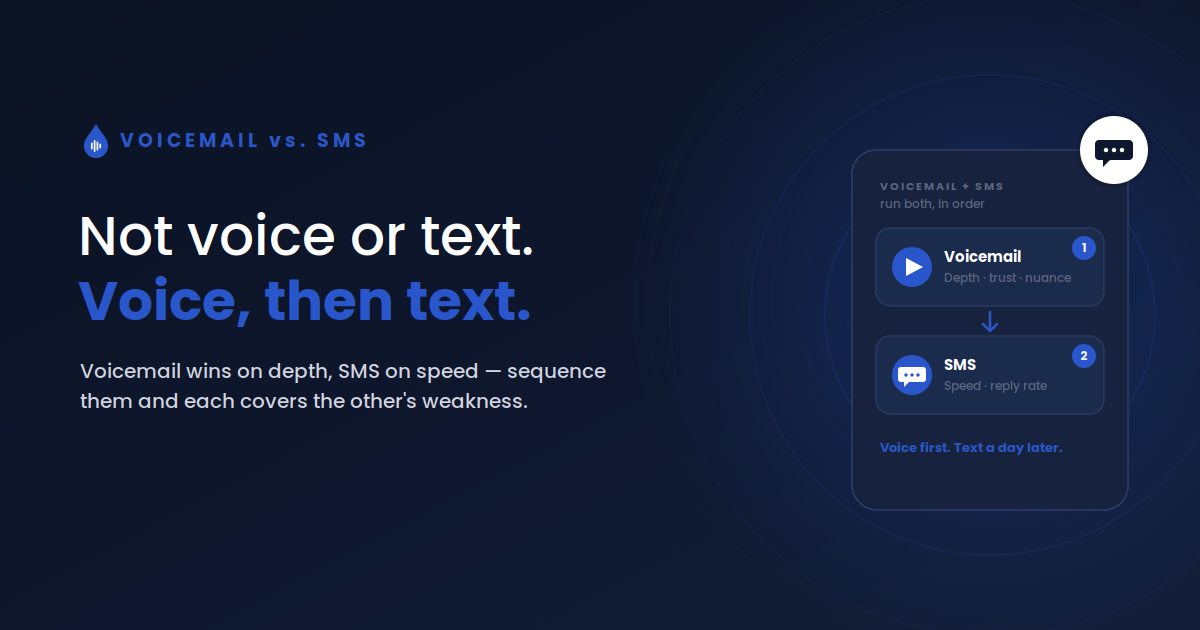
This gets framed as a competition, but the teams getting the best results out of either channel are usually running both — because they fail in opposite directions and cover each other’s weaknesses almost perfectly.
Still, they’re genuinely different tools, and knowing which does what will save you a lot of wasted sends.
What each channel is good at
SMS wins on immediacy and reply rate. Texts get read within minutes, and because replying is effortless, they generate responses at a high rate. If you need an answer today — confirming an appointment, a same-day offer, a time-sensitive reminder — text is the tool.
Voicemail wins on depth and credibility. You can convey more in thirty seconds of speech than in a 160-character message, and tone does work that text can’t. A human voice explaining why they’re calling builds more trust than any written message from an unknown number. For anything requiring nuance or a considered decision, voice carries further.
Where each one falls down
SMS is easy to dismiss. It arrives while someone is mid-task, gets glanced at, and gets swiped away. High open rate, low retention. Compliance obligations around texting are also strict and actively litigated.
Voicemail is slower. The message waits, which is its strength, but it also means you can’t count on reaching anyone within a specific hour. It also demands more of the recipient — thirty seconds of attention versus three.
Which converts better?
For most outbound use cases, voicemail generates higher-quality conversations and SMS generates more responses.
That distinction matters. Twenty text replies asking “who is this?” is not better than five callbacks from people who listened to your full message and want to talk. Measure the outcome you actually care about — appointments booked, deals closed — not raw response volume.
Conversely, if your goal is a simple confirmation or a click, SMS will beat voicemail every time and cost you less effort.
Running them together
The sequence most teams settle on:
Voicemail first. The drop introduces you, explains the reason for contact, and does the persuasive work. Recipients listen on their own schedule.
Text second, a day or two later. A short message referencing the voicemail — “left you a message about your [thing], happy to text if easier” — catches everyone who listened but didn’t act, and gives them a lower-friction way to respond.
That combination reaches people who prefer voice and people who prefer text, without either message doing work the other channel handles better.
Cost
Per message, both are inexpensive at volume, with rates falling as you scale. The more meaningful cost is what happens after: SMS replies need someone to text back, and callbacks need someone to answer the phone. Factor in the staffing before you decide which channel to lean on.
How to choose
Ask what the message needs to do.
Voicemail for cold outreach, complex offers, anything that benefits from tone, and audiences that don’t trust unknown texts.
SMS for reminders, confirmations, time-sensitive offers, links, and audiences that live in their messages.
Both for anything important enough to follow up on — which is most of what you send.